


It’s wreckage is now an artificial reef, but at one point in time, the Tacoma Narrows Bridge was considered a “triumph of structural engineering.” The world’s third-longest suspension bridge when it opened, it was a key military route linking McChord Air Field south of Tacoma with the nearby Puget Sound Naval Shipyard.
Locals called it Galloping Gertie.
The bridge opened in July 1940, and the wind immediately proved to be a problem, causing the bridge’s lightweight deck to rise and fall in long, visible waves. The engineers had anticipated this, however, and tried several methods to dampen the movement so that the structure could continue to carry traffic. It may have been unsettling, but it appeared to be safe.
That is, until November 7th, when the deck stopped merely rising and falling and began twisting, with one side lifting as the other dropped, a condition known as “torsional flutter”. And that was the end of the bridge; each oscillation fed into the next, progressively getting worse until the center span tore itself apart and fell into Puget Sound.
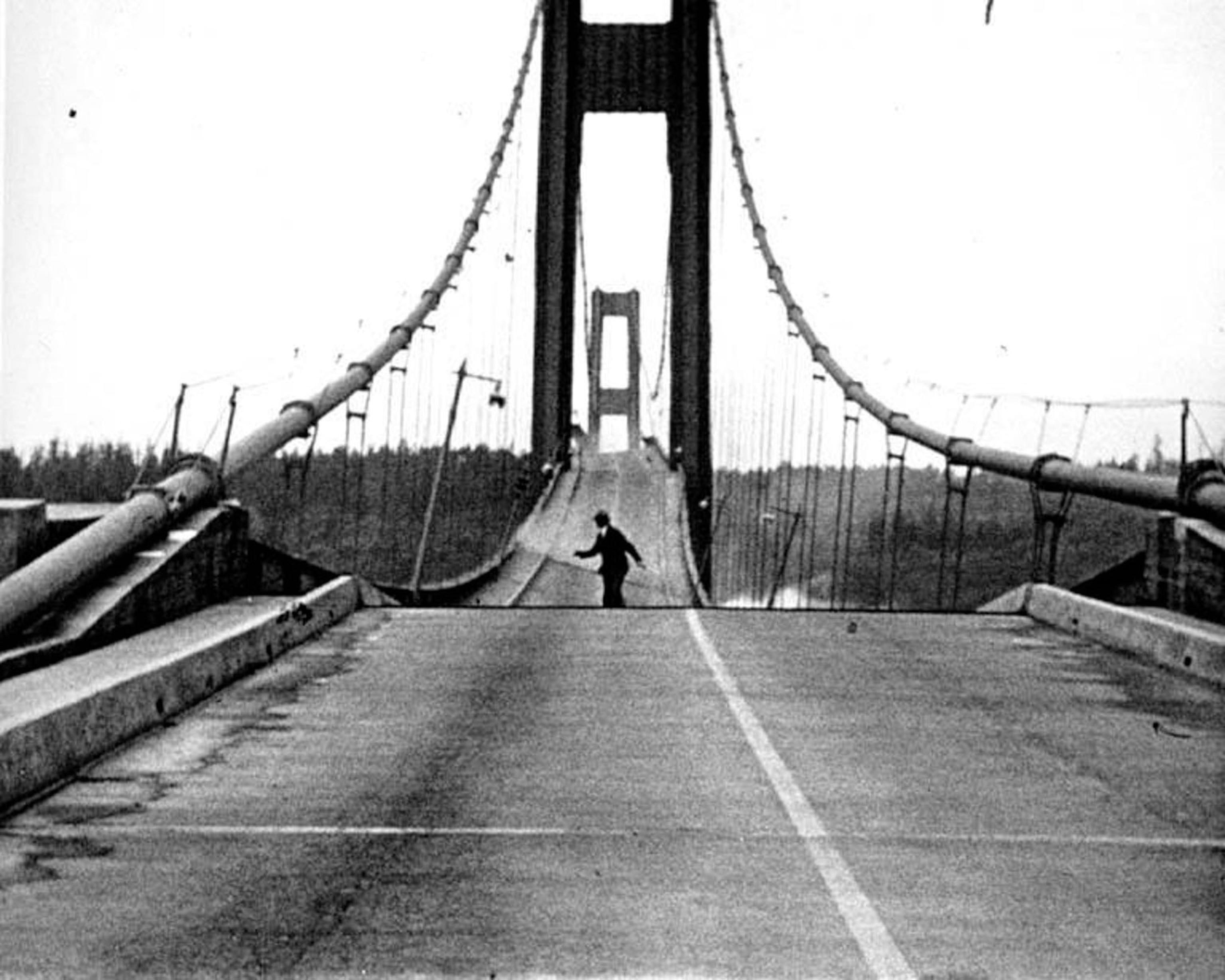
The engineers accounted for the load the bridge would need to carry, and how the bridge would flex vertically in the wind.
But they didn’t know to model the aerodynamic instability that could turn that vertical movement into a destructive torsional oscillation. The incident forced changes in bridge design standards in the United States and spurred the use of aerodynamic modeling and wind-tunnel testing.
The Sean Murphy trade collapsed in much the same way.
The Atlanta Braves understood the trade-offs they were making when they made the deal in December of 2022: Murphy was the older but established two-way catcher. William Contreras was the younger, superior hitter whose glaring defensive limitations created uncertainty in the front office (and the clubhouse) about whether he could remain behind the plate.
The Braves couldn’t reasonably have expected both uncertainties to resolve in the worst possible way against them, but they did: Milwaukee developed Contreras into a viable everyday catcher just as Murphy’s body started to prevent him from remaining one.
The trade didn’t fail because Murphy’s a bad baseball player or because William Contreras kept hitting after he left Atlanta. It failed along the two axes the Braves believed were least likely to move, and both moved against them.
Let’s talk about it.
What Atlanta knew in December 2022
Consider where the Braves were in the months before the trade.
Veteran Travis d’Arnaud and youngster William Contreras were both All-Stars that season, but for different reasons: d’Arnaud’s 33-year-old season was going well, with TDA parleying a first-half .261/.310/.461 line into his first career All-Star selection. Contreras was raking at the plate, too, hitting .260/.345/.532 with 11 homers and being named an injury replacement to the All-Star Team…as a designated hitter.
It was an odd choice, as he had only eleven starts at DH in the first half of the season, but someone needed to replace the injured Bryce Harper.
Contreras would finish 2022 with 57 starts behind the plate, getting 31 more at DH and even a start in left field. He was an accomplished hitter, finishing the year with a .278/.354/.506 line with 20 homers, and was controlled for five more years.
He was also dreadful behind the plate. Statcast graded him at -8 catcher runs in just 519 innings behind the plate, 41st out of 46 qualified catchers in baseball that year. Of the five worse than him, one (MJ Melendez) was moved off the position and another (Robinson Chirinos) never appeared in the majors again.
Contreras graded out negatively in all publicly measured aspects of catcher defense, coming in -5 at framing (8th-worst), -2 at throwing (3rd-worst), and -1 at blocking (“only” 14th-worst). Reportedly, there was a prominent Braves starter who refused to throw to Contreras, which was never publicly confirmed but believed to be Max Fried.1
At the same time, over in Oakland, the Athletics made it known that their Gold Glove-winning veteran catcher, Sean Murphy, was available via trade. Just twenty-eight years old, he was coming off a 5.2 fWAR season that saw him get down-ballot MVP votes. He was an above-average hitter, finishing with the 7th-highest catcher wRC+ and tallying 18 homers and 37 doubles that season while also being a top-five defensive catcher. His pop time was a 95th percentile mark, and with rule changes coming that would encourage more stolen-base attempts, projected to be a weapon in the running game.
Travis d’Arnaud was halfway through a two-year extension and had already dealt with multiple injuries during his Atlanta career, including a 101-day injured-list stint in 2021 that forced the Braves to use seven different backstops.
Anthopoulos struck.
He turned what he believed was a surplus at the position into a strength, dealing Contreras as part of a three-team, nine-player deal to secure what they believed was the best all-around catcher in the deal.
The immediate trade grades supported Anthopoulos, with FanGraphs saying that Atlanta “absolutely got the best player in the trade”, calling Murphy “an absolute stud.” Milwaukee made out like bandits, too, turning a player they (correctly) projected as a fourth outfielder in Esteury Ruiz into a middle-of-the-order bat plus a major league reliever and a flamethrowing prospect.
All because Oakland was insistent on getting an outfielder, and the Braves didn’t have one to give.
For one season, the trade worked
And here’s the thing: it looked to be a good move for the Braves in year one. D’Arnaud suffered another concussion early in 2023, requiring Murphy to play nearly every day for a month, and he responded with a .302/.429/.698 line that fueled an All-Star selection, the first of his career. He produced 5.0 fWAR while splitting time with d’Arnaud and, on a per-inning basis, had a case to be considered baseball’s best catcher.
The six-year, $73M extension he signed shortly after the trade looked to be a steal, securing an elite two-way catcher at a discount.
The second-half slump in 2023, where the big backstop hit .159/.310/275 in 41 games after the All-Star Break, was explained as the catcher acclimating to the summer heat of Georgia.
And on the other side of the deal, Milwaukee got to work.
Milwaukee’s catcher devil magic struck again
Back when I hosted the (award-winning) Locked On Prospects podcast, we used to talk about the Brewers “devil magic” when it came to catchers. They had multiple prospects named the best defensive catcher in the minors over the last few seasons, including Jeferson Quero and Mario Feliciano.
(Little did I know that “Brewers Devil Magic” would become something that even the team’s official MLB.com beat writer would lean into, for the team’s propensity to come through in the clutch.)
The Brewers were known to prospect watchers for being fantastic at coaching catcher defense, with no organization having had better catcher defense since 2010. They got to work with Contreras, who admitted that the trade was a wake-up call, and quickly built him into a better version behind the plate.
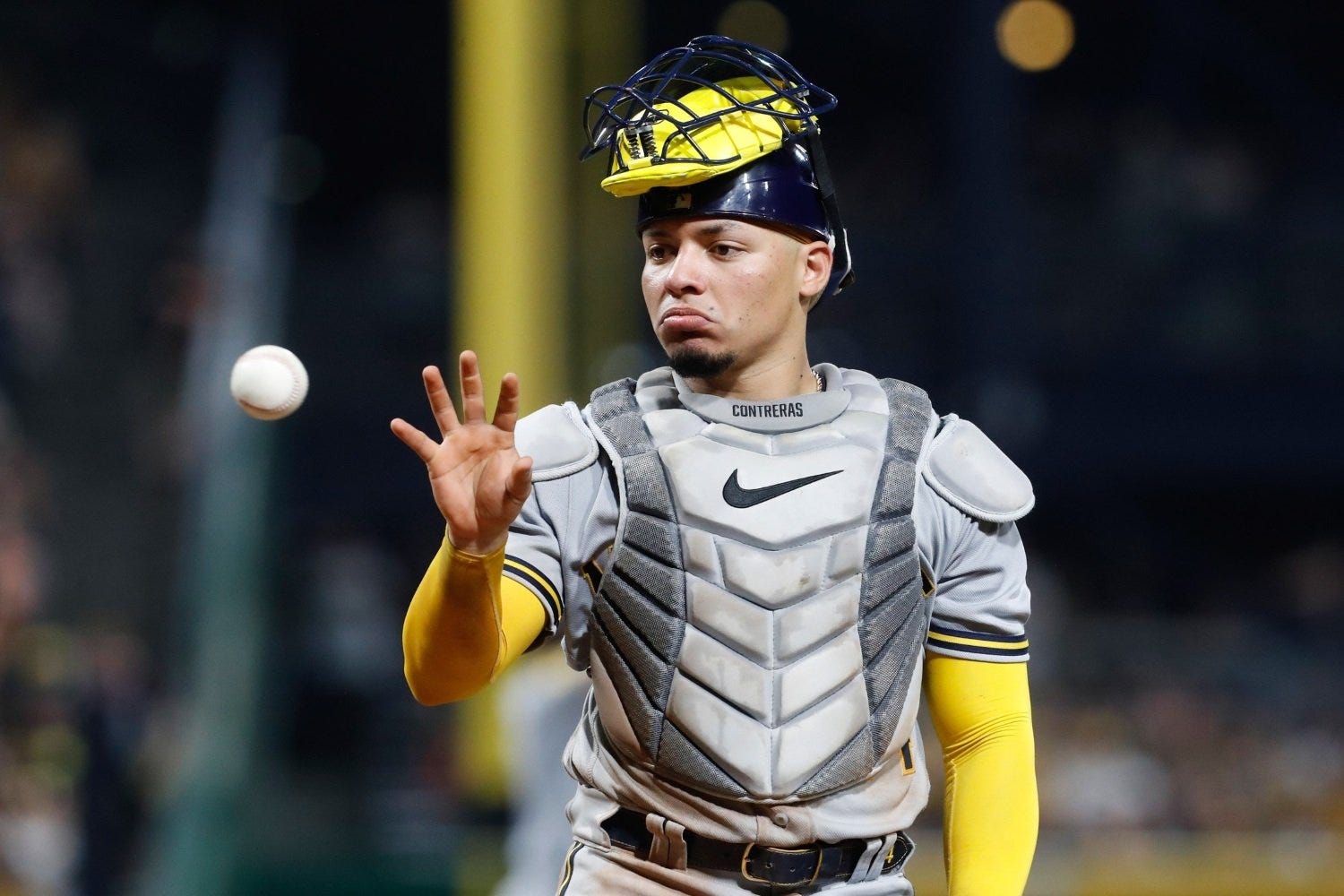
Charlie Greene, then the roving catching instructor and now the team’s bullpen coach, implemented different drills for a now-motivated Contreras. Among other exercises was blocking 90-mph curveballs from a pitching machine, all part of an infrastructure of defensive work the team built around the athletic youngster.
And to Contreras’ credit, it worked. His first season in Milwaukee with the full-time job saw him jump from -8 Run Value in Atlanta to +10, one of the largest season-to-season swings I’ve ever seen. This was largely fueled by Contreras’ improvement at framing, where he jumped from -5 to +9.
Contreras has since surrendered much of that framing value, falling from +9 in 2023 to +3, +1 and finally -6 this year. His overall catcher run value followed the same general decline: After finishing at +10 during his first season in Milwaukee, he posted consecutive +3 seasons before falling to -3 this year.
But Contreras didn’t need to become the best defensive catcher in baseball for the trade to work. He only needed to become playable enough for his offense and durability to carry the rest of the profile, and he did.
And at the same time, Murphy didn’t.
Murphy’s body broke in the opposite direction
Sean Murphy got into a combined 267 of a possible 324 games his final two seasons in Oakland, having never once hit the injured list.
But here’s a convenient timeline of what’s happened so far in Atlanta:
2023: Right hamstring tightness (missed time, but no IL stint)
2024: Left oblique strain
2025: Fractured rib cage
2025: Right hip labral tear requiring surgery
2026: Delayed return from hip surgery
2026: Fractured middle finger and another prolonged absence
And the hip injury stands out because when Alex Anthopulos discussed it in late 2025, he said that it had been something Murphy had been dealing with for three years. It’s possible, although not confirmed, that this could be what really hampered his production in the back half of 2023. Anthopoulos relayed that team doctors were stunned that he was even able to play with such a significant injury.
It’s an unfortunate combination of unforeseeable baseball misfortune — the oblique, rib, and finger injuries — with a chronic hip condition, which may explain some of the offensive deterioration. Did he really forget to hit? Or did he return from an extended absence for another injury and try to get his timing back while being hampered by a hip injury?
Of the four possible combinations, Atlanta landed in the worst one. If Contreras had remained limited defensively and Murphy had stayed healthy, the trade would remain easily defensible. If Contreras improved and Murphy stayed healthy, Milwaukee would have won the deal, but Atlanta would still have an elite catcher. If Contreras remained limited and Murphy got hurt, the outcome would have been disappointing but understandable.
Instead, Contreras became a viable defender just as injuries stripped Murphy of his availability and production. That was the only combination capable of making the trade look this lopsided, and it’s exactly what happened.
What the verdict should be
Milwaukee, unquestionably, won the trade. But Atlanta’s decision was understandable at the time, and that’s the only true way to judge a decision: by the information the team had at the time they made it.
Murphy’s excellent 2023 season prevents this from being completely underwater from a value perspective, with the catcher still returning 7.9 fWAR during his Braves tenure. But it’s correct that Contreras’ development and durability created a much wider gap than the Braves could have reasonably expected.
It’s also worth wondering if Contreras’ remarkable turnaround is what prompted the Braves to move on from catching coach Sal Fasano after 2024, although there’s no public confirmation that the two decisions were connected.
At the same time, the emergence of Drake Baldwin has prevented Atlanta from needing to dramatically attempt to spend capital to solve catcher, even if the team-friendly extension of Murphy’s has become a payroll constraint over the life of the deal.
The Braves did not make a “horrible” and “unnecessary” trade back in December of 2022, as it’s recently been characterized. They acquired the player who was older but safer, more complete, and already established as one of baseball’s best catchers.
They did it by trading an offensively gifted player whose defensive shortcomings were so pronounced that at least one prominent starter reportedly did not want to pitch to him. Contreras later described the trade as a wake-up call that motivated him to address those deficiencies.
Then the “safe” player became almost chronically unavailable, felled by multiple fluky injuries and beset by a chronic condition he hid for too long, while the flawed one finally committed to learning the missing skills that prompted him to get traded in the first place.
The safe one’s become an injury-prone backup, while the one they got rid of is now someone else’s franchise cornerstone.
Good decisions can produce terrible outcomes. The Sean Murphy trade is now both, and pretending otherwise requires ignoring what Atlanta knew at the time.
Max Fried is the only Braves starter from 2022 to not have Contreras as his catcher for even a single start, almost always being caught by Travis d’Arnaud or injury replacement Manny Piña.
Touche, Crosby! This is some elite writing, starting off with that extended bridge analogy to get to the trade.
It's easy to say know that is was a bad trade, but, at the moment, as excited a we were about Contreras, the reality was that we were getting a more established and complete player in Murphy.
I've always felt that part of it has been the way the Braves have handle Murphy. The d'Arnaud/Contreras duo was so successful as a shared catcher position instead of the traditional staying catcher/ back up catcher, that the Braves feel in love with the dynamic. But there are baseball players that don't work like that (it could be argued that most, since baseball is a sport where routine and stability is key). I believe Murphy is better suited for a traditional everyday catching role.
Injuries have been the main obstacle to him getting an opportunity to be an everyday catcher, but managing has been a part of it too. His successor being so good, so fast, also has some part in it.
I agree with Emmanuel… elite writing!
Several lessons to bear in mind as the clamor for AA to make moves this off-season grows. Here are my top 2 takeaways: 1. Every move carries risk, especially injury risk. Big $ acquisitions (especially at oft-injuried positions like pitcher) are big risks. 2. Getting the right staff to develop players at the minor AND major league is more important than ever. Development can’t stop once a player gets to the big leagues.