


I was feeling pretty desperate about the state of the Atlanta Braves at the end of June.
Atlanta had just lost 5-3 to the Cardinals in their final game of June. Despite a 5.56 ERA year-to-date, St. Louis lefty Matthew Liberatore held the Braves to one run on one hit across five innings, striking out nine. It was the fifth consecutive game that Atlanta had been held to three runs or less (the thirteenth time in the month) and cemented a 9-14 record in June.
It was almost like they were…cursed.
So I paid to uncurse them.
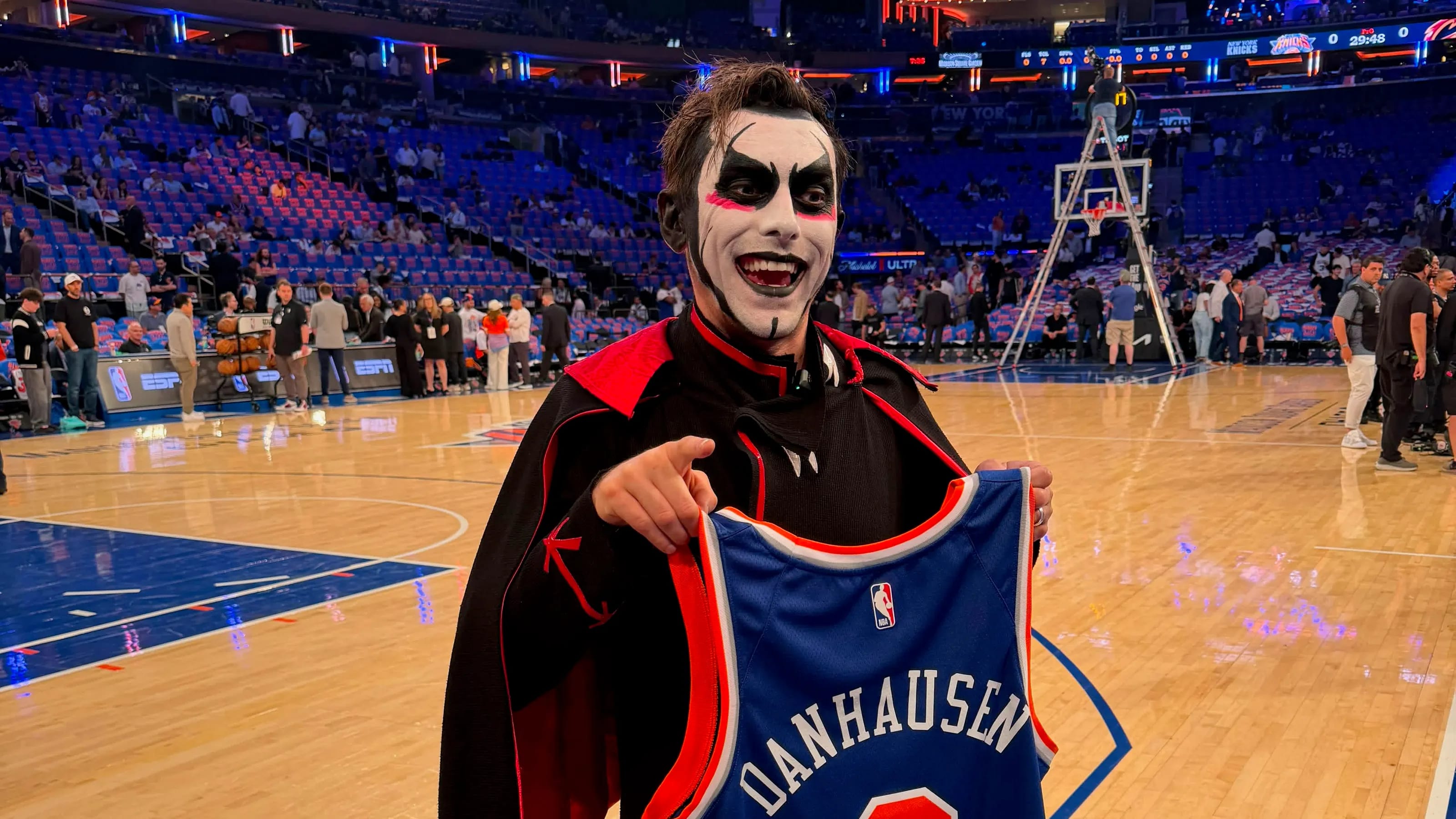
WWE star Danhousen, known for his ability to curse his opponents, was instrumental in the New York Knicks rallying to beat the Atlanta Hawks and going on to win the NBA Championship. I reached out via Cameo, met his asking price of human monies, and asked him to uncurse the Braves.
He did.
Since I got that video in my email, just minutes before Masyn Winn’s throwing error in the 9th inning gave the Braves a 4-3 win over the Cardinals on July 12th, Atlanta is 7-2.
So please know that your subscription dollars are going to good use.
And since the All-Star Break, Atlanta’s 6-2 and back to their winning ways. Not everything’s copacetic, though. Let’s talk about it.
What Is Going Right
Atlanta’s worst-in-the-league offense in June has once again looked like one of baseball’s best. But the way the Braves are doing it is different: power.
Atlanta’s post-ASB offense is putting up 6.88 runs per game, almost two more than their full-season numbers, and it’s thanks to home runs. Atlanta is averaging 2.13 long balls a game, up 59% from what they’ve done over the full season. That’s the primary reason for the scoring surge. Atlanta isn’t drawing more walks or striking out less; the Braves are simply doing substantially more damage when they make contact.
Small Sample Size shenanigan that likely won’t continue: A .338 BABIP
Stock up
Drake Baldwin: Emphatically up
The primary culprit for the power surge is Drake Baldwin, who is hitting like an MVP candidate since the break - .438/.526/.906 with five of his twenty homers coming in the last week. It isn’t just batting average and longballs for Drake, either; he has more walks than strikeouts and a 1.432 OPS. The power surge will cool, but the plate control makes the stretch a bit more persuasive.
Austin Riley: Up, with one red flag
Since the break, Austin’s hitting .355/.394/.645 with three homers, the biggest change relative to a player’s full-season baseline performance. His chase rate for the month has dropped to a season-low 30.3%, and his rolling xwOBA over the last 50 plate appearances has moved above league average for the first time this season.

The red flag, though: He still has only one walk opposite ten strikeouts over the full eight games. The contact has been excellent when he’s making it, but we can’t declare every plate-discipline issue he was showing early in the season solved.
Michael Harris II: power stock up
Since the break, Money Mike’s gone .333/.324/.694 with three homers and six total extra-base hits. He hasn’t walked once, though, which is why his post-break OBP is actually a tick below his season OBP. This feels like it’s more of a power surge than a complete offensive transformation, but I’d happily trade walks for homers seven days a week and Sunday after church.
Stock Down
Ozzie Albies: down despite two homers
He’s hitting .229/.263/.400 since the break and his two homers are doing a lot of work to make this stretch look better from a distance. He’s struck out eleven times against one walk, which comes out to a 29% K rate (compared with his full-season rate of roughly 15%).
The pending return of Ronald Acuña Jr. likely needs to coincide with Ozzie moving from his recent #2 hole to more of a #5 or #6 spot in the order.
What is Going Wrong
Atlanta’s post-ASB ERA is a full run higher than their full-season numbers, and they’re coming about it a frustrating way - more strikeouts, but also 13 homers in 73 innings. More swing-and-miss, but also more damaging contact and more traffic on the bases.
Small-Sample-Size Shenanigan likely to regress: a .313 opponent BABIP
Small sample concern worth monitoring: a 1.60 HR/9 rate
Stock Up
Chris Sale: ace stock remains at the ceiling
Sale’s actually been slightly better since the break as far as baserunners are concerned, sporting a 0.62 WHIP thanks to one walk opposite seventeen strikeouts. He hasn’t so much raised his stock as reaffirmed that he’s the stabilizing force in a volatile staff.
Dylan Dodd: bullpen stock up
Dodd’s performance has been clean in every direction since the ASB, retiring all three inherited runners without allowing them to score and allowing only two hits, no walks, and seven strikeouts in four scoreless innings. He hasn’t been protected by platoon usage, either, facing seven lefties and seven righties. That sample is far too small for meaningful platoon conclusions, but his success hasn’t been limited to favorable matchups.
Stock Down
As you can imagine with a pitching staff that’s struggling, there’s more names here. Atlanta’s post-break pitching has been worse, but probably not 4.68-ERA bad. The staff’s strikeout and walk foundation remains intact, while an inflated BABIP and a handful of concentrated bullpen disasters have exaggerated the decline. The elevated home-run rate, however, keeps this from being dismissed entirely as small-sample noise.
Tyler Kinley: sharply down
Atlanta’s random slider generator has allowed five earned runs on five hits (two homers) in just 2.1 innings, blowing a save and sporting a 19.29 ERA and 2.57 WHIP. I plan to dive into him sometime in more detail over the weekend - look for that article early next week, as understanding if he’s cooked versus having terrible outlier homer luck on the slider will help inform the team’s trade deadline plans for the bullpen.
Grant Holmes: slightly down, not collapsing
In two starts, Holmes has delivered the same basic line twice: five innings and three runs. He hasn’t allowed a home run, but he has struck out only seven against four walks in 10 innings. The 13 hits are less concerning than they initially appear because opponents have run a .382 BABIP against him, something unlikely to continue. Still, the modest strikeout total and four walks show that he hasn’t controlled at-bats particularly well. The results are down, but the underlying picture isn’t as alarming as the 1.70 WHIP suggests.
Reynaldo López: down
In his one post-ASB start, López allowed five earned runs on nine hits and three walks in less than five innings. One outing is certainly not a trend, but given his struggles this season, it was concerning enough to make him a natural “monitor closely” entry.
Don’t worry here
Victor Mederos: Promise, but he can get blown up
Atlanta’s top pinch-hitting option out of the bullpen, Mederos has allowed five earned runs on seven hits in 4.2 innings since the ASB. That being said, his four-run ninth inning against San Diego accounted for most of the damage, so let’s acknowledge the concern here is mostly concentrated in how an inning can spiral against the inexperienced Mederos.
Dylan Lee: Don’t believe the post-break ERA
Some will point to Lee’s 9.82 post-break ERA as a cause for concern. He has allowed an earned run in three of four appearances, so the damage isn’t confined to one disastrous outing. But he has also allowed an absurd .556 BABIP.
The strikeout and walk numbers have remained excellent: six of the 16 batters he has faced have struck out, while only one has walked. Four of his six hits allowed were singles. Although he has already surrendered as many home runs since the break as he did in his first 43 innings, his overall foundation appears intact. This doesn’t look like a collapse in command or swing-and-miss ability. It looks like small-sample noise, making Lee the bullpen’s strongest positive-regression candidate.
Atlanta is 6–2 since the break because an offense scoring nearly seven runs per game has covered for a pitching staff allowing nearly five. Some narrowing should occur in both directions: the Braves won’t keep slugging .539, but their pitchers probably won’t continue allowing a .313 BABIP, either.
The encouraging part is that Atlanta no longer needs to search for signs of life. The offense has supplied plenty of them, while most of the pitching concerns remain either concentrated or correctable.
Atlanta no longer looks cursed. Now it has two months to prove it doesn’t need magic.
Atlanta’s top pinch-hitting option out of the bullpen, is a classically funny line.
The sacrifices you make!