


Today’s installment in my MLB Draft Primer series brings us to pick number 84. This is where we really start to see Atlanta lean into overslot prep talent, whether they're pitchers or position players.
Last year it was Briggs McKenzie, who signed for $3 million after being selected in the fourth round. In 2023 it was Garrett Baumann, who received a $747,000 bonus. Names like Dixon Williams and Herick Hernandez fit the mold of recent college money-saving options in the fourth round as well.
The pattern has become fairly clear. Atlanta has consistently used rounds four through six to take swings on high-upside prep talent, and with another strong bonus pool this year, I would not be surprised if they follow that script again.
With that in mind, here are a few names on both the college and prep side that I would keep a close eye on.
2026 Braves Today Draft Guide
Jason DeCaro, RHP, North Carolina
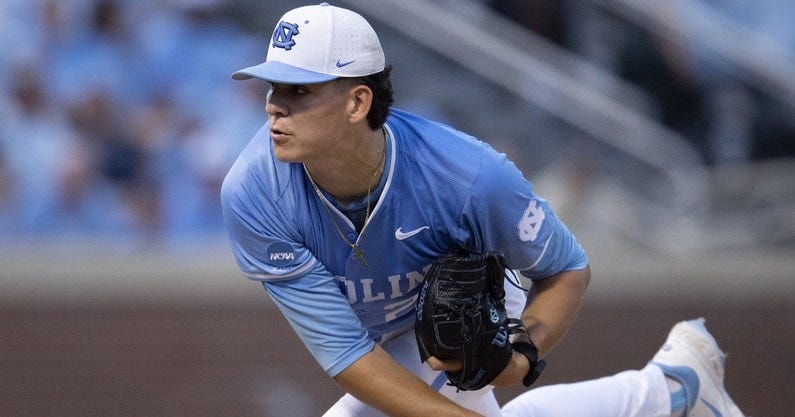
First up is North Carolina right-hander Jason DeCaro, the first of two Tar Heels on this list. After reclassifying and arriving on campus in 2024, he quickly developed into one of the more dependable starters in college baseball. Somehow, he is still just barely 20 years old. Across three seasons, DeCaro made 53 starts and finished with a 26-7 record and a 3.46 ERA. His best season came in 2026, when he posted a 2.87 ERA, a 24.0% strikeout rate, and an 11-3 record.
Physically, he checks just about every box. At 6’5” and 230 pounds, he looks every bit the part of a professional starter. His fastball usually sits in the low-to-mid 90s, but he can reach back to 98 mph when needed. He complements it with a high-spin slider and curveball, with an improving changeup as well.
I would not be surprised if a professional organization eventually introduces either a cutter or another fastball variation to further expand his arsenal. He has already shown the ability to command multiple pitches, and that foundation gives him a high floor.
Ryan Lynch, RHP, North Carolina
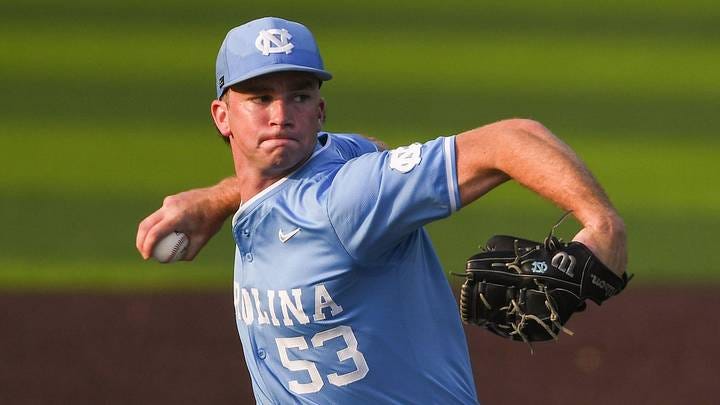
DeCaro’s running mate at North Carolina is Ryan Lynch. While DeCaro feels like the safer bet, Lynch may actually possess the higher ceiling. He stands 6’3” and weighs around 230 pounds with plenty of strength already on his frame.
As a freshman, Lynch worked primarily out of the bullpen, posting a 2.93 ERA, 3.77 FIP, 27.2% strikeout rate, and 9.4% walk rate. After moving into the starting rotation this season, some of those numbers dipped, including a 4.21 ERA, but the raw stuff still jumps off the page.
A lot of Lynch’s profile is built on projection, but the upside is easy to see. He already throws two distinct fastballs, featuring both a sinking two-seamer and a flatter four-seamer that consistently sit in the mid-90s. The movement difference between the two keeps hitters uncomfortable, and his sweeper flashes as a legitimate plus pitch. He has also continued working on a changeup.
He may not have DeCaro’s résumé today, but if everything clicks, Lynch has the type of arsenal that could make him the better professional pitcher down the road.
Chris Rembert, 2B/OF, Auburn
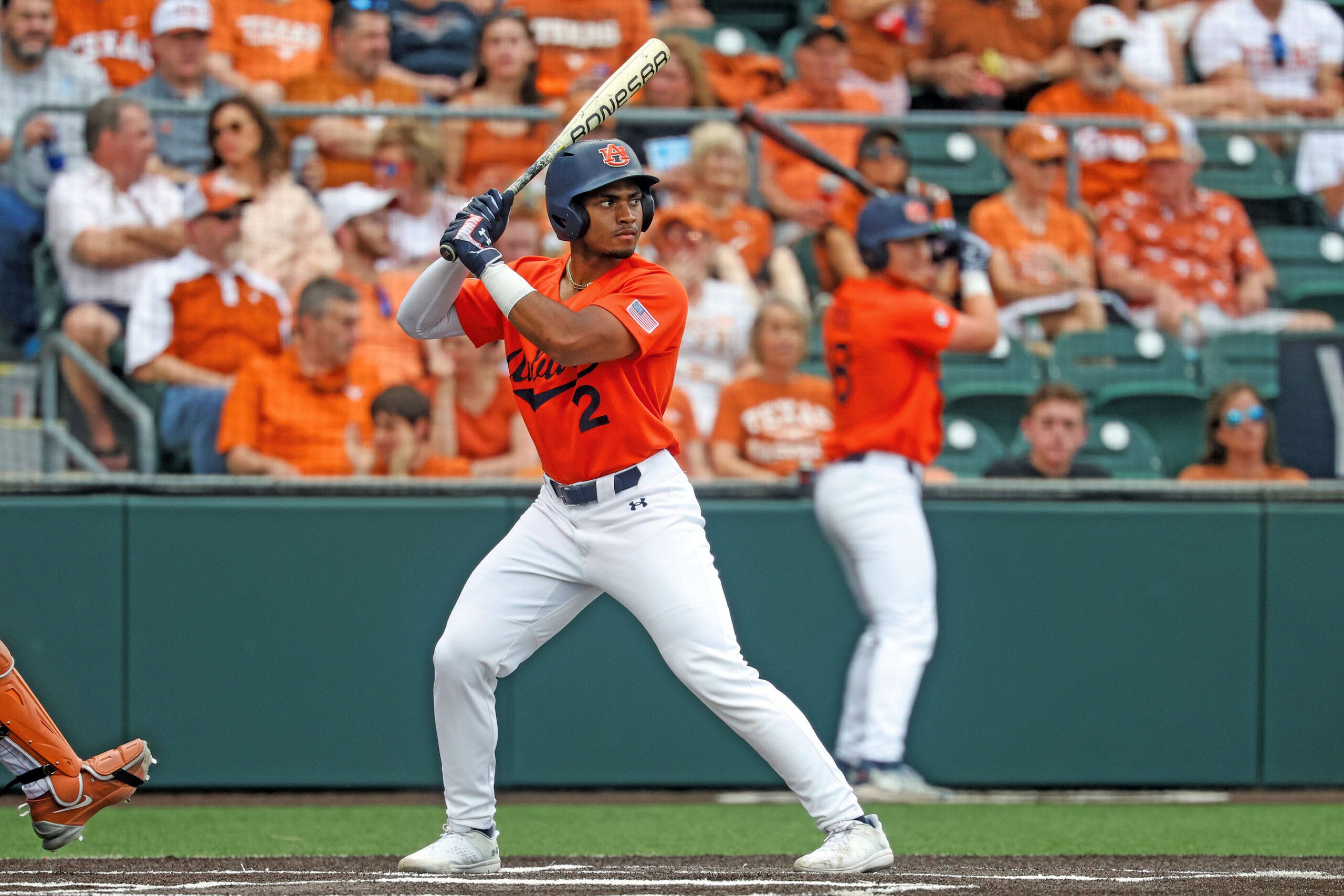
One player I highlighted before the college season was Auburn’s Chris Rembert, and I still think he makes a lot of sense for Atlanta in this range.
Rembert dealt with some injuries this season that limited his power production, but his hit tool never disappeared. He hit .343 in back-to-back seasons. As a freshman, he posted a 1.022 OPS with 10 home runs and 14 doubles. This season, his OPS dipped to .858 with four home runs and 13 doubles, though he still struck out only 14.7% of the time. His walk rate did fall from the previous year, dropping to 7.2%.
He has a compact swing that creates more power than you might expect. There is enough strength and bat speed here that scouts can dream on a .300, .400, .500 offensive profile if everything develops. Defensively, second base remains his natural home, but his athleticism has allowed him to move into the outfield as well. That versatility only adds to his appeal.
(Editor: I’m in favor of Rembert, obviously - LLC)
Kevin Roberts Jr., OF, Jackson Prep
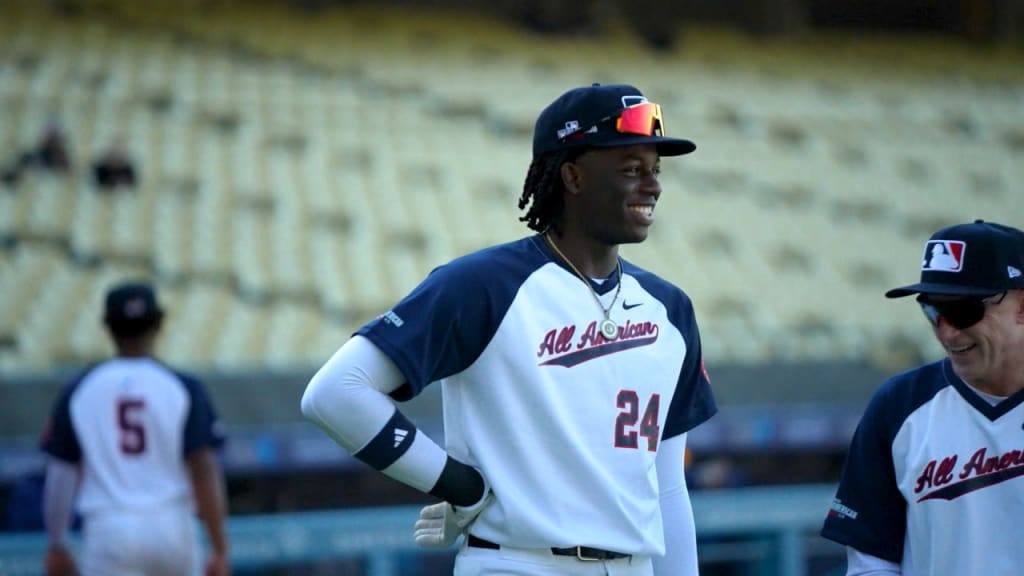
If you enjoy betting on upside in the draft, Kevin Roberts Jr is probably your guy. The Mississippi prep outfielder was teammates with Konnor Griffin and has been on scouting radars since his freshman year. At 6’5” and roughly 220 pounds, Roberts Jr is one of the more physically gifted athletes in this class.
Despite his size, he moves extremely well and creates some of the loudest contact in the draft. The ball absolutely jumps off his bat, and he has shown an ability to handle premium velocity. The next step is simply getting the ball in the air more consistently. With his raw power, elevating more often could unlock another level offensively.
He was also a legitimate pitching prospect, giving him one of the strongest outfield arms in the class. While right field seems like the long-term fit, he has enough athleticism to handle any of the three outfield spots. There is certainly risk here, but there is also legitimate star upside. That is exactly the type of profile I would be willing to gamble on in this part of the draft.
Logan Schmidt, LHP, Ganesha
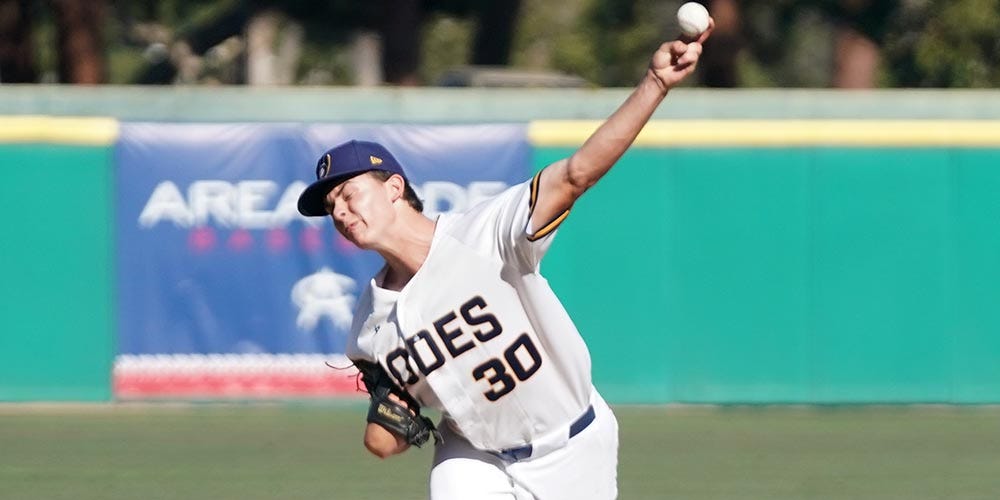
After reclassifying, Logan Schmidt will be one of the youngest players available in this year’s draft. The California native is committed to LSU, a program that has done an excellent job getting talented recruits to campus, so buying him away from college may not be easy. That said, there will be plenty of professional teams willing to make the attempt.
Schmidt stands 6’4” and 220 pounds with an already impressive frame. His fastball works comfortably in the mid 90s and has touched 97 mph, and there may still be another jump in velocity as he continues to mature physically. His lower release point creates plenty of running action on the fastball, and he has already shown encouraging feel for a changeup, slider, and curveball.
He already throws plenty of strikes, so the command is there. If a professional pitching development group can sharpen those secondary offerings over the next few years, Schmidt has the ingredients to become one of the better left-handed pitching prospects in baseball.
Martin Shelar, OF, Marist

If there is one word that defines Martin Shelar, it is power. The Marist High School outfielder consistently produces exit velocities north of 100 mph with both wood and metal bats. At the Draft Combine, he reached as high as 115 mph.
His setup is fairly narrow and upright, but everything after that is quiet, efficient, and direct. He gets excellent lower-half rotation into the swing, creating easy leverage and natural loft on the pull side. That helped him lead the country in home runs this spring. What stands out just as much is the approach. Shelar struck out only 13% of the time on the prep circuit and has built a reputation for controlling the strike zone while avoiding empty swings.
He has spent time in center field, but as he continues to fill out, right field feels like the better long-term fit thanks to his above-average arm. Maybe this is the Georgia native in me talking, but I would absolutely love to see this hometown kid end up in the Braves organization.
Maxx Yehl, LHP, West Virginia
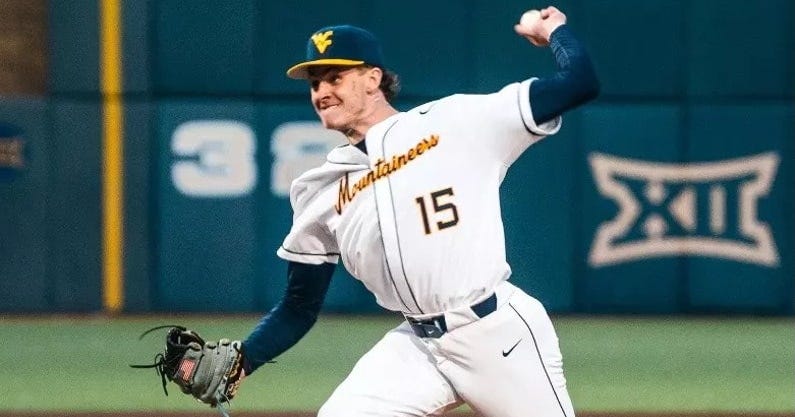
If you thought I was done talking about physically imposing pitchers, think again.
West Virginia’s Maxx Yehl stands 6’6” and weighs roughly 235 pounds. After spending his first two collegiate seasons in the bullpen, he transitioned into the rotation this year and turned in one of the best seasons in college baseball.
Over his first two seasons, Yehl made 41 relief appearances while posting back-to-back sub-4.00 ERAs. Once he moved into the rotation in 2026, everything took another step forward. He recorded career-best marks with a 2.13 ERA, 4.07 FIP, 1.07 WHIP, 27.9% strikeout rate, and 6.5% walk rate. His fastball sits in the low 90s with heavy sink, but his extension and release point make it play much harder than the radar gun suggests. Both his slider and curveball flash as above-average offerings, and there is room to continue developing a reliable changeup.
This is an intriguing profile because the success comes more from movement, deception, and command than overwhelming velocity. I think there is more here than the raw stuff might initially suggest.
Prediction: Martin Shelar, OF, Marist
Atlanta has never been afraid to bet on power, and if Shelar is still on the board here, his combination of strength, approach, and long-term upside could be difficult to pass up.
Great work Taylor. !!!!
In 4 hours it starts.
Rounds 1-4 today.