


The Atlanta Braves have had a rough few years.
After winning the 2021 World Series, the organization put up consecutive 100+ win seasons that were buttressed by NLDS eliminations. They then scratched and clawed their way into the postseason in an injury-riddled 2024, only to get swept in a best-of-three Wild Card series.
And then the bottom fell out. The Braves went just 76-86 last year, their worst mark since 2017’s 72-90 campaign and good for only a 4th-place finish in the National League East.
It wasn’t just the losses that frustrated fans, either.
This year offers the organization a chance to exorcise some demons and rebuild some trust with the fanbase. Let’s talk about it.
Unforced errors for the Braves
The on-field performance last season was bad enough - a 21-35 record in one-run games, nine shutouts, and multiple seven-game losing streaks.
But off the field, there were plenty of frustrating moments for the fans to absorb.
On the morning of April 2nd, with the Braves sitting at 0-6 and preparing for a series finale in Los Angeles against the Dodgers (one they would ultimately lose via walkoff homer from Shohei Ohtani), Atlanta Braves Holdings made an announcement about an exciting new addition: Pennant Park, an office complex adjacent to The Battery Atlanta.
The press release highlighted the 34-acre property, its 80% occupancy rate, and the value it could deliver to shareholders. But aside from a brief mention of additional parking for visitors to The Battery Atlanta, the announcement didn’t offer much that resonated with fans.
And the timing was awful. The public reaction was immediate and loud, and comments like ”don’t worry, they didn’t sign a starting pitcher in free agency, but they were able to get a new office building” are still heard today.
But that’s not all. We chronicled some of the growing fan unrest about season ticket prices in late July, when the resumption of play after the All-Star Break saw many A-List Members receive renewal notices featuring steep price increases, tighter limits on ticket resales, the elimination of the popular 27-game plan, and relocations to accommodate new premium seating options.
Some of this is coincidental - season ticket prices are often set a year in advance, and no Braves officials could have predicted that the team would be 44-56 on the date of my newsletter. But it still combined to be a source of pain for Braves fans, several of whom told me that they felt squeezed by paying more for less - less flexibility, fewer benefits, and fewer wins on the field.
Some of that fan sentiment has reached even non-season ticket holders, mainly through what they view as a refusal to sign reinforcements for an injury-plagued rotation. In the last two years, eight Braves starters have made nine total trips to the injured list, with all but one of them eventually going on the 60-day IL and missing multiple months. In that time, the Braves have signed exactly two starting pitchers - veteran Martín Perez, who agreed to a minor league deal on January 30th of this year, and Carlos Carrasco, who signed a minor league deal as an emergency injury replacement last August and is still with the organization.
The frustration from fans over the past year is understandable.
While I can’t make the front office sign a free agent starting pitcher (and there’s not a quality option out there at the moment, anyway), there are still some easy wins the Braves can grab to start rebuilding that trust.
BravesVision: Access over price
We don’t yet have sign-up information or detailed plans for BravesVision, the organization’s production and distribution of their games in the local markets this season. We have some details, namely that the organization was working to “partner with cable, satellite, and streaming services” to distribute BravesVision for the 2026 season. Fans in Braves Country can also pay for Braves.TV, in-market streaming through the league’s out-of-market distribution platform, MLB.TV.
UPDATE: Shortly after publication, the organization announced that Braves.TV will be priced at only $99.99 for the entire season or $19.99 per month, matching most MLB-produced teams across the league and beating the price of the Athletics or Giants ($119.99), the Mets ($149.99), Phillies ($169.99), Orioles ($179.99), and the Dodgers ($199.99).
And this is a real opportunity.
While those distribution deals aren’t finalized, preliminary reports are that the Braves are casting a wide net: Distribution deals with Comcast, Charter, and DirecTV, as well as potentially YouTube TV and Hulu TV.
Braves officials are saying the right things publicly, with President and CEO Derek Schiller telling investors last month that the organization is working on “optimizing outcomes across subscriber reach, distribution, advertising and streaming options while continuing to ensure fan access.”
That last part - fan access - is the key.
As much as the Braves need to make money from BravesVision - broadcast revenues accounted for $189M of their $635M in baseball revenues last year, although the league’s national TV deals are also in that figure - making the broadcasts accessible for fans should be the primary goal.
The organization’s working on that, too. Part of the BravesVision announcement was the news that some of the in-house produced games were also going to be carried over-the-air via Gray Media. Anyone in the 26 Southeast markets with a Gray affiliate can watch the games with only an antenna.
But the Braves can still go further.
Getting BravesVision in as many households as possible needs to be the #1 priority, not setting ambitious carriage costs and hard-line revenue targets. Terry McGuirk’s comments in that same earnings call have me a bit concerned that they’re trying to strike a balance and it may drift a bit too far in the other direction. “We have one of the largest television territories in baseball spanning (six) states, which affords us the ability to optimize our financial outcome, a factor that provides us an advantage that no other Main Street team has,” McGuirk said. (emphasis added)
But there’s even more that the organization can do.
Enhance the fan experience in Truist Park
I enjoy watching games in Truist Park. Admittedly, I haven’t watched games from anywhere other than the press box in the last few seasons, owing to my growing coverage responsibilities (and that’s not a complaint, trust me).
But the fan experience can always be improved.
A new trend is quietly spreading across MLB: affordability.
The St. Louis Cardinals have introduced all-you-can-eat seats, priced at only $29. For one low price, Fans sit in ‘Big Mac Land’ (sections 271-272 in left field) with unlimited access to a long list of traditional ballpark foods from when the gates open to the end of the 8th inning, including hot dogs, nachos and cheese, popcorn, chicken tenders, ice cream, and soda.
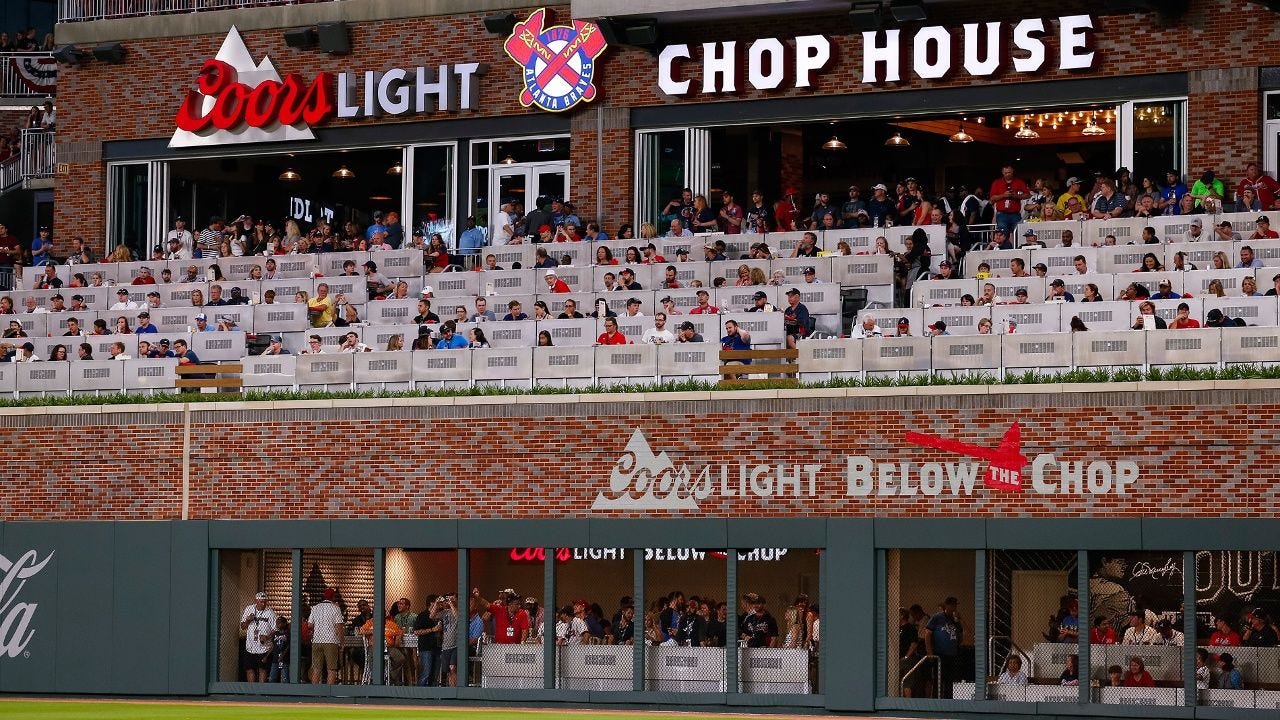
All You Can Eat seats are not new to baseball or even Atlanta - I was in Turner Field on June 22nd, 2008, in all-you-can-eat seats when Mark Teixeira hit three home runs in an 8-3 victory over the Seattle Mariners. The Braves currently offer AYCE seats in an area called ‘The Pen’ adjacent to The Chop House in right field. But food service ends after the 5th inning and tickets start at around $90.
The Atlanta Falcons have, famously, shown that outrageously high ballpark food prices are not a requirement if they want to go further. Mercedes-Benz Stadium has a ‘fan-first’ approach to its concessions, featuring an average 50% decrease in the price of concessions from its old Georgia Dome pricing. The NBA Hawks followed suit one year later.
It’s hard to argue that the ‘fan-first’ pricing hasn’t been a success. - Front Office Sports reported in December 2024 that the Falcons saw a 30% increase in transaction volume, with 20% increases in the average number of items per transaction and an accompanying 20% increase in merchandise sales.
Put simply, the Falcons are selling more food per order, more food overall, and more merchandise to fans who attend games.
If the Braves don’t want to wholesale slash prices across the board this season in Truist Park, there are still easy opportunities to build goodwill with fans. The Minnesota Twins, for instance, have instituted $2 beer specials or $2 ‘Happy Hour’ specials (which include beer and basic ballpark food) on select dates from when the gates open until the scheduled first pitch.
It’s not just in place for midweek, ‘lower-tier’ opponents, either; they’re doing this on a Friday night and Saturday afternoon for the reigning AL champion Toronto Blue Jays on May 1st and 2nd, a Friday and Saturday in May for the NL Central-winning Milwaukee Brewers, and a Saturday in August for the visiting Philadelphia Phillies.
This isn’t hard, but it’s intentional
None of these ideas require the Braves to suddenly spend like the Dodgers or overhaul the entire business model of the organization.
What they do require is something much simpler: a visible commitment to the fans who fill Truist Park, subscribe to broadcasts, and support the club through good seasons and bad ones.
After a disappointing year on the field and several unpopular decisions off it, the Braves have an opportunity to reset the tone heading into 2026.
Make the games easier to watch.
Make the ballpark experience more affordable.
Show fans that their experience matters as much as the next real estate development or shareholder report.
Winning games will always be the most important ingredient in rebuilding trust. But while the Braves work toward getting back to October baseball, there are still plenty of ways to remind fans that they’re part of the organization’s future too.
And those wins might be the easiest ones the Braves can get all season.
Agree. You are talking about spending some nickels here that will bring in the $20’s.
I completely agree with your comments. Bobby Cox and John Schuerholz established a remarkable winning tradition in Atlanta. During AA's leadership the franchise status has diminished with a depleted minor league system and a major league roster that is devoid of depth, especially pitching. Decisions like Durbin, Profar, and Kelenic are indicative of why we are here and I'm not confident AA has the ability to reverse the negative trends he has overseen.