


It’s no secret that the ultimate issue for both the 2024 and 2025 Atlanta Braves was injuries.
In 2024, the Braves limped into the playoffs on the season’s final day despite losing one-third of the everyday lineup to injuries. Per OptaStats, no other MLB team has ever made the playoffs in a season where they lost three Opening Day starters for the final 35+ games of the regular season…and that’s underselling it. The Braves lost Spencer Strider in early April, Ronald Acuña Jr. in May, and Austin Riley in August to season-ending injuries. They also saw Michael Harris II miss 60 days, Ozzie Albies miss 70, and key setup man AJ Minter miss 82, including the final two months of the season with hip surgery.
In 2025, it was a different story. The injuries were largely in the pitching half of the roster, save for a second season-ending injury to Austin Riley and the loss of Sean Murphy to a lingering hip ailment. Atlanta famously had all five Opening Day starters on the 60-day injured list at the same time last season, the first time that had happened in MLB history.
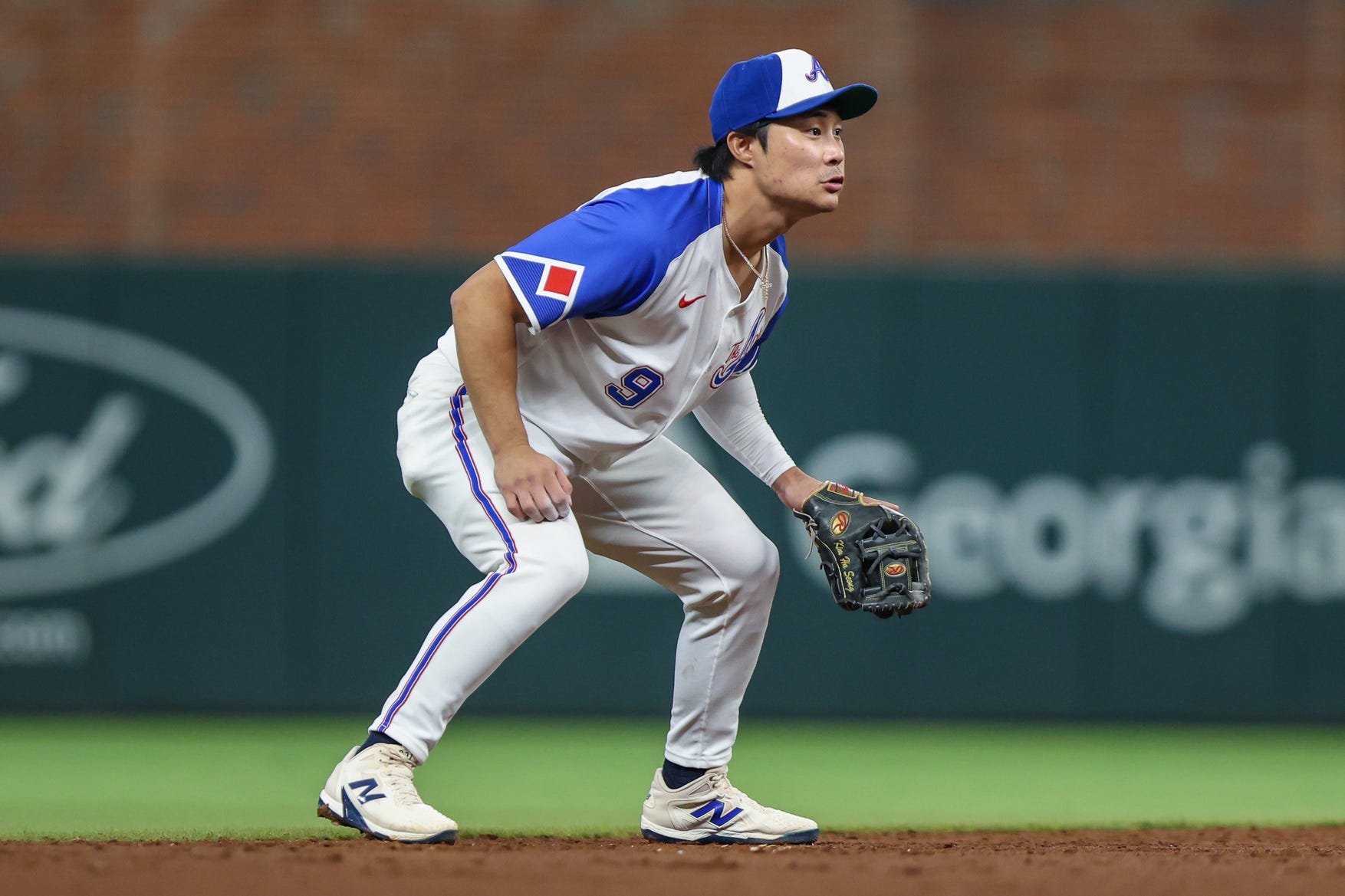
President of Baseball Operations Alex Anthopoulos has been aggressive this winter, extending roughly $64.1M in new commitments for 2026. He’s signed a shortstop in Ha-Seong Kim (1/$20M), brought back closer Raisel Iglesias (1/$20M) while pairing him with closer Robert Suarez (3/$45M), added a strong-side outfield platoon bat in Mike Yastrzemski (2/$23M) and traded for super-utility Mauricio Dubón ($6.1M in his final year of arbitration). Cumulatively, these signings have filled in a lot of the holes on the roster and provided some much-needed injury insurance.
But was this the right move, or would the Braves have been better served to make a blockbuster acquisition to raise the ceiling of the roster? Let’s talk about it.
This is the best bench the Braves have had in years
Something that Anthopoulos has referenced seemingly every single offseason is the fact that it’s been incredibly hard to build a quality bench in Atlanta.
There’s just no playing time to give.
In a normal season, Atlanta’s going to have several players play all 162 games. Matt Olson has done it every season since he was acquired after 2021, while Marcell Ozuna did it in 2024, and Dansby Swanson did it in 2022. Several other stars have exceeded 157 games in that timeframe, including Austin Riley (2021-2023), Ronald Acuña Jr. (2023), Orlando Arcia (2024), and Ozzie Albies (2021, 2025). The roster typically sports near-everyday players at every position but left field (usually a platoon) and catcher.
Because of that, playing time is incredibly hard to come by and the makeup of the team’s bench has reflected that reality. Atlanta’s top bench options on Opening Day have featured such options as Nick Allen and Eli White (2025), Luis Guillorme and Forrest Wall (2024), Ehire Adrianza and Sam Hilliard (2023), and the pairing of Alex Dickerson and Orlando Arcia in 2022.
Instead, for 2026, Atlanta’s bench shakes out (as of now) as the following options:
Super-utility Mauricio Dubón, who can play near-elite defense anywhere on the field and has a career .762 OPS/113 OPS+ against lefties.
Outfielder Mike Yastrzemski, who has been one of the best strong-side platoon bats with a career .809 OPS/110 OPS+ against righties and can play above-average defense at all three outfield spots.
Utility-in-training Eli White, who can play all three outfield spots at a “near Gold Glove level” (per Anthopoulos) and picked up 10 homers and 10 stolen bases in just 271 PAs last year
Either former top infield prospect Vidal Bruján, now a utilityman, or baseball rat Brett Wisely, a former Giants prospect with a light bat but plenty of defensive experience up the middle at shortstop, second base, and centerfield
The idea here is that, with longtime designated hitter Marcell Ozuna departed in free agency, the Braves can rotate Yastrzemski and either White or Dubón through the outfield to give players time off or ‘half-days’ at DH while having a high-quality defensive backup in Dubón if anyone other than a catcher were to miss time.1
It’s very easy to see how the first major injury to an everyday starter is covered by either Dubón (if in the infield) or a combination of Yastrzemski and Dubón or White in the outfield, with infielder Nacho Alvarez being another option in Gwinnett.
And having a top-tier pinch-hit option off the bench is something that can’t be dismissed, either. Depending on the lineup that day, Yastrzemski, whichever catcher between Drake Baldwin and Sean Murphy isn’t starting that day, or even Eli White can be the first PH option off the bench in any given contest, based on game situation and handedness of the opposing pitcher. Being able to take that player and trust them defensively to cover anywhere on the field for the rest of the game can’t be dismissed, either - light-hitting shortstop Nick Allen was often pinch-hit for last season by catcher Drake Baldwin and then the team would need to use another bench player (often Luke Williams) to replace Allen’s glove at short. With Dubón in the fold, virtually any player can be pinch-hit for with only a single bench spot being used.
It’s easy to see how subtracting any one non-superstar from the 2026 Atlanta Braves shouldn’t fundamentally tank the team’s chances of remaining in contention.
Should they have raised the roof instead?
But in all of their spending, what the Braves did not do is find a direct replacement for the departed Ozuna and his MVP-caliber bat of 2023 and 2024, where he hit a combined 79 home runs & 204 RBI with a 148 OPS+.

No, their additions have been more about maintaining the floor rather than significantly addressing the team’s ceiling. Atlanta elected to ensure competitiveness throughout the lineup instead of adding another superstar-level threat to the top of their lineup, already a murderer’s row of a former MVP (Ronald Acuña Jr.), a former home run king (Matt Olson), a multi-time top five MVP finisher (Austin Riley), and the reigning NL Rookie of the Year (Drake Baldwin).
There are two schools of thought on this.
The first is that those stars, not a single offseason addition, will make or break the fate of the Braves offense. We saw what it looks like in 2023 when everyone more or less both stayed healthy and hit their 90th percentile outcomes. As a reminder, Atlanta tied MLB’s single-season home run record with 307 longballs and was the first team in league history to have a collective slugging percentage of .500 or better, finishing at .501.
Over the next two years, everyone except for Matt Olson missed time and even Olson saw a dip in his power numbers, twice finishing with 29 homers after slugging a MLB-leading 54 in 2023. Acuña played in just 144 games and hit a combined 25 homers, a per-162 pace of just 28 homers after finishing his MVP season with 41. Riley missed 112 games and saw his 135 OPS+ of 2021-2023 drop to 117 in 2024 and just 104 last season. Ozzie followed up his 126 OPS+ season with campaigns of 95 OPS+ and 89 OPS+, missing a combined 68 games and hitting just 26 homers.
Would adding one superstar bat, anyone from designated hitter Kyle Schwarber to outfielders Cody Bellinger or Byron Buxton, cover if those superstars continued to not play like superstars? I’d argue no, because we’ve seen this before.
Marcell Ozuna was the only reliable power threat in the 2024 Atlanta Braves offense, finishing as the 4th-place finisher in NL Most Valuable Player voting after hitting .302 with a 154 OPS+, 39 homers, and 104 RBI. But with a plethora of underperforming stars and injury replacements in the lineup around him, he was walked a then-career-high 74 times and Atlanta’s pitching staff drug them into the playoffs with a league-best 3.49 ERA and 120 ERA+.
The second line of thinking here is that adding the right superstar bat, preferably someone who could play the field instead of clogging up the DH spot (so no Schwarber or first baseman Pete Alonso), could allow them to keep some of those stars healthy while also lengthening the lineup at the top. Would adding Byron Buxton, who could bring his 137 OPS+ of the last two seasons to all three defensive spots, help keep Ronald Acuña Jr. on the field and provide insurance if centerfielder Michael Harris II has another career-worst first half at the plate?
It’s possible, although important to point out that Buxton has injury concerns of his own, having only played more than 100 games in three of his eleven years in the league.2
Would adding Cody Bellinger, who can play all three outfield positions as well as first base, give the team a high-impact contact bat that could provide the same injury/CF insurance as Buxton while also helping the offense transition to the Tim Hyers Center for Putting Ball in Play a Lot? Sure, but does the cost outweigh the benefits?
What are the tradeoffs here?
When trying to decide between these two approaches, it’s not one or the other: It’s the choice you could have made versus what you wouldn’t have if you made that choice.
Let’s use a trade for Buxton or a signing of Bellinger to lay this out.
Trading for Buxton
While this is speculation because Buxton (as of time of publication) has not been traded, it’s commonly assumed that Minnesota would want young, controllable pitching back in the deal - they have multiple high-level position player prospects on the way, especially in the outfield, so arms would have been the centerpiece.
For a Braves team that saw their top six starters go on the IL at some point last year and used a post-2020 high of 19 different starters3, trading away AAA starter JR Ritchie and at least one other high-minors arm would have meant weakening the rotation depth not just for 2026, but future seasons to get a bat, albeit one with multiple years of afforadable control.
Would the current crop of starting rotation options be sufficient to make it through 2026 if you remove Ritchie and another Triple-A starter? (Let’s assume either Didier Fuentes or Blake Burkhalter here). What if Bryce Elder was also in the deal to provide reliable back-of-the-rotation innings? We don’t yet know the answer, but it feels like the team would need to supplement their rotation as soon as 2027 (after Chris Sale’s team control is up) or 2028 (when Reynaldo López could also be out the door).
Signing Bellinger
The Braves could save the starting pitching depth with an outright signing of Bellinger, although the financial cost means sacrificing depth elsewhere. The crowdsourced projection for Bellinger’s likely free agent deal is five years and $140M, an average of $28M a year.
Adding Belli means more than likely not having either Yastrzemski or Ha-Seong Kim, who collectively are accounting for $29M this upcoming season.
Bellinger is obviously an upgrade on Yaz for at least the two years that Yaz is signed for, although I question the long-term viability of Bellinger’s contact-and-ballpark-driven profile, but not having Kim is a bigger loss.
Dubón’s biggest value is his defensive versatility, but in this scenario, he’s miscast as an everyday defensive shortstop. Does he hold up from a health perspective? Can he improve his offense when playing the toughest infield position on an everyday basis? He’s regressed from his .720 OPS/97 OPS+ of 2023 to a .651 OPS/83 OPS+ in the last two seasons.
I’m in the camp of assuming that Kim will return closer to his breakout 2023 numbers as he gets a full season removed from his 2024 shoulder surgery. He hit .260/.351/.398 that season, a 107 OPS+ campaign that saw him hit 17 homers and steal 38 bases while winning a utility Gold Glove. Improving from last season’s small-sample-size 93 OPS+ in Atlanta to a 107 would give the Braves one of their deepest lineups since 2023, although even Dubón’s 78 from last season is still an upgrade over Nick Allen’s 53.
Not only would Bellinger’s offensive contributions need to carry the ∆/gap between Kim and Dubón’s 2026 OPS+, but they also would need to carry any potential downgrade from Dubón-as-a-starter’s offense to whoever is the backup, likely a bigger drop-off than the potential downgrade from Kim to Dubón if injury were to strike. Under the current roster construction, either Brett Wisely or Vidal Bruján would be the everyday shortstop, barring some sort of DFA or trade acquisition of a veteran glove to man the position every day.
Which route makes more sense?
Atlanta’s chosen path, to fortify the floor and count on the existing superstars to push the ceiling, makes the most sense with AA’s usual approach to roster building. Braves teams, on average, are deeper than their peers, even if not as spectacular in star power at the very top. Look at the top trios recently in the division for an example of what I’m talking about:
Philly: Kyle Schwarber, Bryce Harper, Trea Turner
New York: Juan Soto, Francisco Lindor, Pete Alonso (through 2025)
It’s hard to argue that from a production standpoint, Atlanta’s top three hitters (Ronald Acuña Jr., Matt Olson, and Austin Riley) are equivalent to those trios and both teams have a shortstop in there, to boot.
But it’s also hard to argue that the Braves don’t have a better 4 through 6 hitters, with Drake Baldwin, Ozzie Albies, Michael Harris, and Marcell Ozuna (through 2025) frequently outpacing such luminaries as Brandon Nimmo and Jeff McNeil (#5 and #6 in lineup bWAR for NY) and Edmundo Sosa and Bryson Stott for Philly.4
But at the same time, the other approach - push the ceiling by acquiring as many stars as possible - is more fun and exciting. Trust me, I get it. As someone who does a live postgame show roughly 130 times a year, wins are more fun to talk about than losses and having a bunch of superstars mash is definitely more fun to talk about.
But Atlanta’s injury-related losses of the last two seasons have shown the need to improve the team’s depth. It’s statistically unlikely that they have such a disproportionate percentage of injuries for a third consecutive season (and there are some team medical and training staff that likely need to polish up their resumes if it happens again), and so the improved depth approach feels like it has the most potential to succeed.
Remember, the decision is right or wrong based on the information you have when you make it. We can’t look back in hindsight and say “well, no one got hurt in 2026 so having Buxton would have been more helpful than having Yaz and Kim,” we need to evaluate the decision today.
And as of today, the last two seasons have shown us that one more star bat might not have been enough, but multiple pieces of depth could have been.
Let’s see if that was the right call.
Anthopoulos speculated that Dubón would find a way to work it out behind the plate, too, shortly after making the trade with Houston. “ The fact that he has the ability to literally play every position. The only one I guess I don’t know of is (to) catch, but I bet you if he wanted to, he could probably do that as well.”
Also important to point out that two of those three years have been the last two, so maybe he learned something about his body after hitting 30.
Sixteen starters and three closers when you classify José Suarez’s single start as coming out of the rotation, since that’s where he was working in Gwinnett prior to the outing.
Yes, 2025 is kinda the exception to this, but the general concept is true in most seasons of the last four.
I corrected my payment information. Please collect for December.
My apologies. I move money, i get hacked every 2-3 months.
William Nichols
Braves could not keep a "bench" because Snit would NOT PLAY a bench. Snit let the starters tell him when they played or not. Are you saying Weiss will "do it" differently than Snit and actually PLAY his WHOLE TEAM? Huh; what a novel idea!!! And, what if rested players don't get HURT as much? (Never mind the "generational sissy" tag some athletes have earned)