


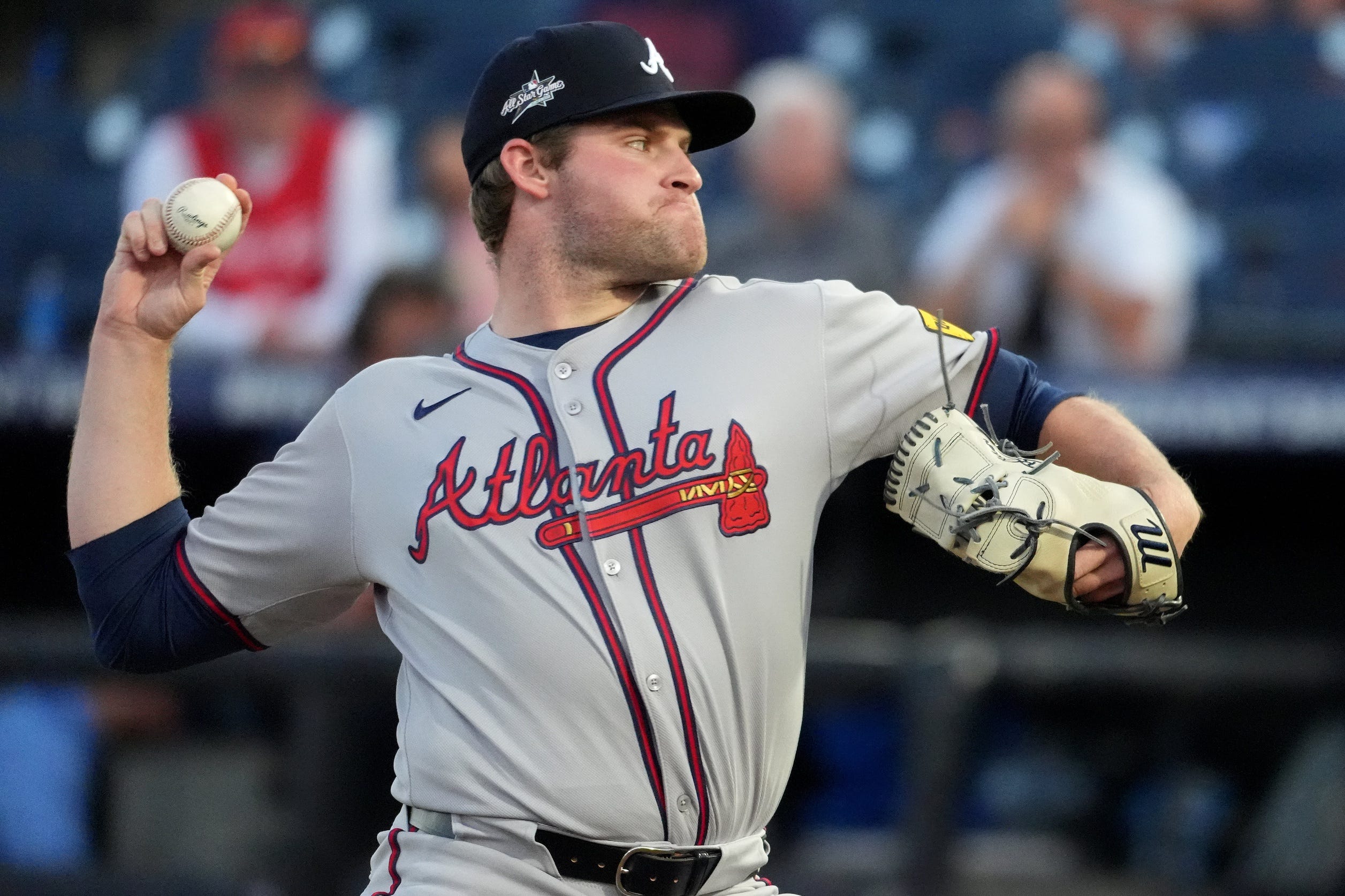
Quick, tell me who has pitched the most innings for Atlanta in the last three seasons.
Here’s a hint: This newsletter’s about him.
Bryce Elder not only has the most innings across the last three seasons with 380.2, he’s in the top four for innings since 2021 at 434.2, behind only Spencer Strider (455.0), now departed Max Fried (603.0) and presumably-retired Charlie Morton (687.2).
While it’s true that Elder’s 4.58 ERA and 4.40 FIP is the worst of the quartet, it’s still important to recognize that the fact he’s on that list at all makes him valuable - innings in Major League Baseball are harder to find than ever, and all of his have not been bad. Despite making one more start than Strider in that span (78 to 77), they both have 24 losses on their ledger and Elder put up eight quality starts in his last eleven outings of 2025.
I’m in no way saying that Elder’s just as valuable or critical as Spencer Strider - after all, Strider’s a former Strikeout King (2023) who has been both a Rookie of the Year and Cy Young finalist and signed a multi-year extension within one year and ten days of his 2021 debut.
But the belief among some in the fanbase that Elder should be designated for assignment simply because he’s posted a career 4.58 ERA/4.40 FIP is a bit extreme.
That being said, what do the Braves do with the sinkerballer in 2026? Let’s talk about it.
Who Elder is as a player
Elder’s been a remarkably consistent pitcher during his four major league seasons, throwing the same four pitches with only minor variations in velocity and movement. He’s a classic sinkerballer, throwing a sinker and slider as his primary pairing and adding in a four-seam fastball and changeup in varying percentages. Versus lefties, it’s a true four-pitch package, but righties see almost exclusively the sinker and slider.
Over time, there have been changes to that basic quartet, some good and some not so good.
Improvements:
Velocity - when Elder first debuted, his average fastball velocity was roughly 90 mph, coming in at 89.5 on the sinker and 90.8 on the 4S in his first full season (2023). Last year, he averaged 91.5 on the sinker and 92.8 on the 4S, respectively, so 2 mph better on both.
In 2023, his single hardest pitch was 93.0 even, an elevated four-seamer which induced a flyout of Francisco Lindor.
In 2025, he threw 228 pitches at 93.0 or harder, with a max of 95.4 on September 24th against Washington. He threw four of the six hardest pitches of his career in this outing, striking out seven across seven innings with three runs allowed (his 14th quality start of the season) but Atlanta lost 4-3.
Sequencing - Elder’s gotten slightly less predictable in recent seasons, throwing more four-seamers and less sinkers for the first pitch of the at-bat and trusting his ancillary pitches more when he’s behind in the count, especially early in 1-0 counts. Like almost all starters, he’s extremely primary-pitch reliant in 3-0 and 3-1 counts, but earlier in the at-bat when behind in the count, he’s more willing to vary up what he does than in previous seasons.
But it’s not all positive changes, and here’s where I think the opportunities for improvement lie.
Degradation:
Pitch movement - that increase in velocity I pointed out earlier has come at the expense of the movement profile of many of Elder’s pitches. And I think this is the main problem for Elder recently. Let’s look at each pitch in turn:
Sinker - Elder’s traded some vertical drop for horizontal armside movement, a deal that’s helped to mitigate the pitch’s weaknesses. Back in 2023, Elder’s sinker had almost two inches less armside run than the standard righty sinker. He’s lowered that deficit from 1.8 inches to just 0.7, sacrificing less than an inch of drop to do it (25.8 to 24.6 inches of actual drop1). While the adjustment has overall mitigated some of the outlier weakness of the pitch, the movement is still below-average.
Slider - Here’s my real concern. The slider previously had positive outlier drop, coming in at almost five actual inches (4.8) and 6.4 inches of induced vertical break more than the average righty slider. While the horizontal movement was poor, at half an inch of gloveside movement, it was a prototypical and very effective bullet slider. Now, the slider’s given back three inches of that outlier vertical drop in exchange for 1.4 inches of added horizontal movement. Unlike the sinker, which was taking a little bit from its average vertical drop to fix a weakness, this was taking from the pitch’s good characteristic (drop) to mitigate the weakness in horizontal movement. Not a good tradeoff to me, and Stuff+ confirms it - the slider has dropped from a high of 107 Stuff+ to last season’s 98.
Four-seam fastball - Really simple here - the extra velocity (+2 mph) has left the below-average induced vertical break of 15.2 inches (2023) relatively unchanged, improving it by one-tenth of an inch while taking two-tenths of an inch from the horizontal movement. This is such a small movement change that it’s essentially a wash - it could be within the range of error for the league’s data collection setup.
Locations - Elder’s left a larger percentage of his pitches in attack zones 4-6, so either middle-in, middle-middle, or middle-away. The number is small, at roughly 7/10ths of a percent more in 2025 than in 2023, but opponent performance on those pitches spiked from a .468 slug in 2023 to a .619 last year. On a similar vein, the opponent wOBA (Weighted On-Base Average, which is an adjusted version of OPS that adds additional weighting to extra-base hits to more accurately credit or penalize pitchers for how an opposing batter reaches base) shifted up from a slightly-below-average .3162 to a .392.
Most of this location degradation is on the slider, which went from 5.7% to 6.4% and saw its wOBA rise from .279 to .484 - better than average to significantly worse.
How to fix Bryce Elder
I’ve got a few ideas of what Atlanta and new pitching coach Jeremy Hefner might do to work on Elder’s consistency and locations going forward.
The first comes down to the root of his diminished movement - was this the result of deliberate changes, like tweaking a pitch grip, a side effect of adding velocity, or something else?
I can see an argument for any of those three reasons, especially because some of the other likely explanations don’t really track. His arm angle has remained remarkably consistent, sitting at 52° in 2022 when he debuted and finishing last season at…52°. The targets from the catchers, while not officially tracked, have seemed pretty standard across seasons - throw down in the zone to keep the ball on the ground.
The movement profile feels like it is the most likely explanation, but let’s look at other improvements the team can implement to address this.
Pitch mix
Say it with me: throw a cutter.
Bryce has actually done it before! Back in 2024, he threw exactly one cutter, inducing a groundout of former Braves catcher William Contreras.
Adding a cutter can help bridge the four-seam fastball and slider, for days when the sinker just isn’t on. Easy answer…but I want to go deeper.
Elder’s arsenal is what I’m going to call ‘location dependent’ - since nothing has a significant drop, he needs to nail his locations. For the most part, he has, with a Location+ component of Stuff+ coming in at a 108 last year and always being positive for his career, but Elder’s lack of movement on his pitches mean that he can’t “luck” his way out of a bad location.
Essentially, if he leaves the ball a bit higher than intended, it gets crushed because it doesn’t have enough movement to miss a barrel in the zone or drop itself back out of the strike zone.3
I want to give Bryce Elder a vertical-breaking pitch, ideally some sort of curveball. Whether that takes the shape of a 12-to-6, some sort of slurve, or even a knuckle-curve remains to be seen, but something with more vertical drop than the rest of his arsenal should buy him the margin of error to survive a poor location as well as give him another breaking pitch on the occasion his slider isn’t working.
Another change I want Atlanta to make is to stop giving Bryce additional rest. Sometimes it’s unavoidable, right - the beginning of the season, the All-Star Break, rainouts, etc. But whenever possible, Atlanta needs to keep Bryce on schedule to pitch every fifth day.
I remember talking to Joe Simpson, Braves legend and member of the radio team, about Elder back in 2024, and he passed along some wisdom from his playing days: A sinkerballer is at his best when he’s a little fatigued.
The idea here is that when a sinkerballer is at 100% from an energy perspective, that little bit extra he has means that he sometimes overthrows, leading to poor locations.
I’m not saying that Simpson’s right or wrong, but I want to pass along some stats from Elder’s 2025 season about opposing hitter performance based on his days of rest.
Four days: .250/.308/.399
Five days: .263/.333/.446
Six+ days: .320/.371/.536
With Anthopoulos telling me last month that a six-man rotation wasn’t sustainable on a long-term basis, the obvious solution is to keep certain guys (like Elder) on his regular schedule and move around the rest or use spot starters to buy extra rest for the postseason guys. It’s a recipe that the Braves have successfully implemented in the past. Here’s Anthopoulos from November: “I do think there’s real value to it, and you guys saw it in 2024 when we led all of MLB in ERA. We used the off days, we moved guys back. We really protected guys and it worked well for us.”
Chris Sale is on record that he’ll pitch whenever the team tells him to (and throw whatever the catcher tells him to, as the veteran notoriously does not ever shake off), while the rest of the rotation has experience moving around as needed. Assuming Elder makes the rotation, keeping him on schedule and moving everyone else around, similar to what the Braves did with Max Fried (who also liked staying on schedule), might be the best bet here.
On Elder in the rotation…
That is clearly the best outcome for the 2026 Atlanta Braves, assuming Hefner and Co’s changes work for him.
That may be a controversial take, but as you’ve already made it 1700+ words into the newsletter so let me explain:
We know per Anthopoulos that, barring health, the rotation has four locks in Chris Sale, Spencer Schwellenbach, Spencer Strider, and Reynaldo López. Whether or not you think López should be a lock is a different conversation; both Anthopoulos and Weiss have said on the record that they’re viewing him as one of the top four starters entering spring training.
After them, the team’s options for the fifth spot are as follows:
Bryce Elder, who is out of options
Grant Holmes, who is out of options
Hurston Waldrep, who has a minor league option remaining
If the goal is to get the absolute best five starters in the rotation on Opening Day, Waldrep’s likely to get the final spot. But that’s not how Anthopoulos works. Remember, the goal isn’t to win the most games in the regular season, it’s to get through the regular season in a good position to win the World Series. And to do that, you need depth.
In light of that different approach, I think the best case scenario is for an improved Elder to make the Opening Day rotation, with Holmes moving back to 2024’s ‘utility pitcher’ designation and Waldrep starting off the season in Triple-A Gwinnett. Elder’s consistency and ability to give innings can help Atlanta get through the marathon of a 162-game season, while a lowered workload can potentially help Holmes protect his rehabbed and non-surgically-repaired UCL. This also puts both pitchers in positions of experience - Elder has never consistently worked out of the bullpen, but Holmes spent most of 2024 there and excelled in his multi-faceted role.
Waldrep’s workload can also be protected in Gwinnett with one-weekly starts, allowing him the necessary time to prove he’s a postseason-caliber starter and cement last season’s drastic changes and hopefully allowing him to be healthy and effective by the postseason. I was told that he was feeling the effects of his innings late last season, with Waldrep among the proponents in Atlanta’s clubhouse to temporarily implement a six-man rotation for the season’s final weeks, so managing that workload will be paramount.
In this scenario, the immediate rotation depth for spot starters or in case of injury consists of Holmes and Waldrep, backed by occasional spot starts by Joey Wentz and José Suarez and whatever prospects the Braves believe are ready for promotions (Blake Burkhalter, J.R. Ritchie, Didier Fuentes, and potentially Luke Sinnard). In a standard year (so excluding last season’s historic run of rotation injuries), the Braves use between ten and thirteen conventional starters. It’s easy to see how the Braves could get to that number using the existing players under contract or in Gwinnett.
But a lot of that is contingent on Hefner helping Elder find that next gear. I’m anxious for spring training to get here to see if they’ve done that.
Of course, there could be another explanation.
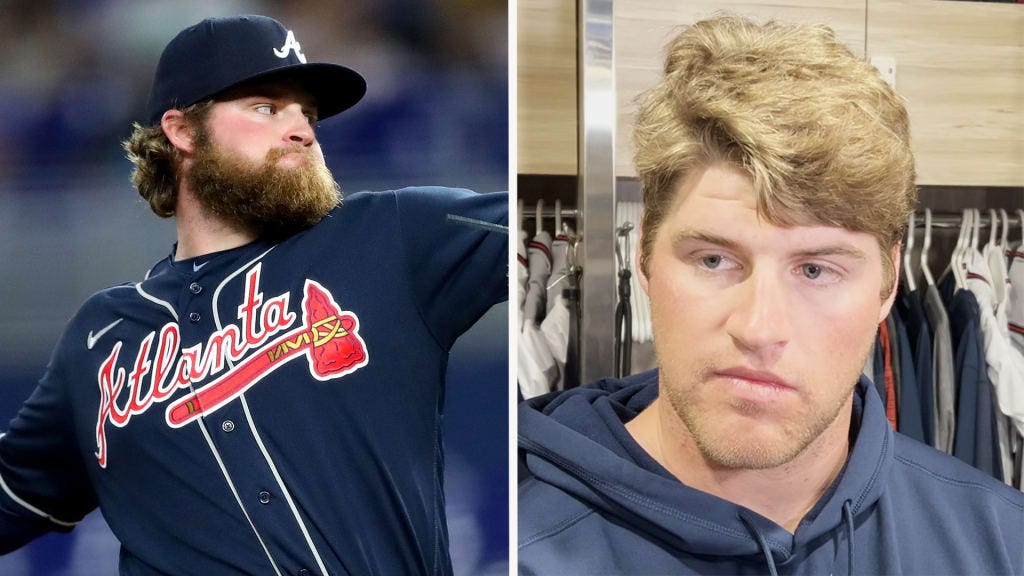
Maybe he just needs to bring the beard back.
NOT induced break here, so gravity is factored in to this number.
.320 is roughly league-average
The Tampa Bay Rays took the extreme step for a while of having all their catchers set up in the exact middle of the plate and letting the pitch’s natural movement take it out of the heart of the plate. The difference between Tampa’s arms and Elder is that they all have exceptional movement profiles.
First time posting. I am in total agreement with Elder being part of the rotation. While last was forgettable at best, Elder was there to take the ball every time his turn came up. He can be counted on.
RESPECT YOUR ELDER!!!
I genuinely appreciate Bryce Elder and everything he’s already given this team. I’ve got a strange affection for him, and honestly, he’s nowhere near appreciated enough by the fan base.
Even if—and it’s a big if—the new pitching coach doesn’t magically fix everything, Elder holding down the No. 5 spot for the first half of the season still matters. There’s real value in stability. Letting him take the ball every fifth day helps protect and develop the younger arms without rushing anyone into roles they’re not ready for.
But wouldn’t it be perfectly Braves-appropriate if the adjustment does click? If Elder quietly unlocks something, stops being “just serviceable,” and turns into a legit No. 3 starter—while pitching out of the five spot?
Three more years of a reliable, competitive Bryce Elder? That’s not nostalgia—that’s roster construction done right.
Respect your Elder.